Menopause changes things. That much is obvious.
What is less obvious is what to do with those changes. Too often, the conversation becomes a long list of symptoms, losses and things to “fix”. A more useful question is: what do you want to keep doing?
Another lap. A longer walk. Another active weekend away. A game with friends. Whatever keeps you moving and connected to the life you love, strength helps you keep saying yes.
Why does strength matter during menopause?
Hormonal changes through menopause can affect muscle and bone health. That makes strength worth paying more attention to, not because everyone suddenly needs to become a gym person, but because muscle, bone and strength underpin so much of what an active life asks of us.
The encouraging part is that strength is something you can work on. Resistance activity gives muscle a reason to adapt. Nutrition provides support. Bone benefits from both movement and nutrition. The pieces are connected.

Four habits worth building
Include strength training
Muscles need a reason to stay strong. Australian physical activity guidance recommends adults include muscle-strengthening activities on at least two days each week. Resistance might come from weights, machines, bands, bodyweight movements or a suitable class.
The important thing is finding an approach that challenges your muscles, suits your experience and gives you somewhere to progress. You do not need the most impressive routine. You need one you will keep coming back to.
Give protein a regular place in your day
Protein provides essential amino acids that support muscle maintenance and repair. Midlife is a useful time to become a little more deliberate about how much protein you're getting and where it appears across your day.
Protein has a habit of turning up late in the day. Dinner usually gets plenty of attention. Breakfast and lunch are worth a look too. Adding yoghurt, milk, eggs, tofu, legumes, fish, lean meats or another suitable protein-rich option earlier in the day can make it easier to spread protein across your meals.
Support bone health
Strong bones need both the right stimulus and the right nutrition. Resistance training, weight-bearing activity and appropriate impact activity can provide physical stimulus for bone, while protein, calcium and vitamin D all have roles in bone health. Healthy Bones Australia provides further guidance on exercise and bone health.
Menopause is a useful time to check in on both sides of that equation. Are your bones getting useful stimulus from the way you move? Does your diet regularly include protein-rich and calcium-rich foods? If you're unsure about your bone health, calcium intake or vitamin D status, talk with your doctor or another appropriate health professional about your individual circumstances.
Build a rhythm you can repeat
The best plan is not necessarily the most impressive one. It is the one that survives Tuesday. Put strength activity where it has a realistic chance of happening. Keep convenient, nutritious protein-rich options available. Have a smaller version of the plan for busy weeks.
Strength is not built through occasional perfect weeks. It is built through useful choices repeated often enough to matter.
The important bit? These things work together.
Strength training provides the stimulus for muscle to adapt. Nutrition supports muscle and bone health. A repeatable routine gives both a chance to matter over time.
You do not need to optimise everything. You need enough of the right things, often enough.
Where does creatine fit?
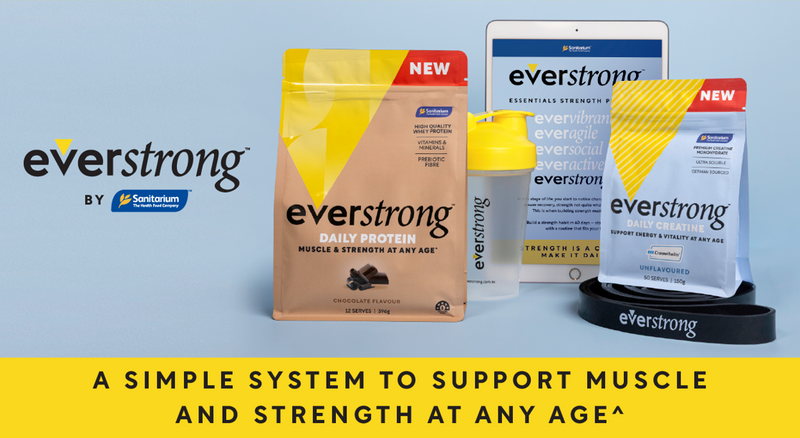
Creatine monohydrate is one of the most researched nutritional supplements. Much of that research has historically focused on sport and exercise, but as the conversation shifts towards the importance of staying active and capable throughout life, interest in creatine is broadening too, including research in women, midlife and healthy ageing.
The Australian Institute of Sport summarises evidence for creatine monohydrate across resistance training, brief high-intensity exercise, recovery and cognitive functions. Its Sports Supplement Framework places creatine in Group A, the category used for supplements with strong scientific evidence for use.
That's part of what makes creatine such an interesting area of nutrition research. But the foundations still matter.
Think of creatine as an amplifier of good habits, not an alternative to them.
It belongs alongside regular strength training, good nutrition and repeatable habits, not instead of them.
What strength makes possible
Menopause may be a new chapter. It does not have to be a smaller one. Strength can support the capability and confidence to keep doing the things you love, take on the challenges that interest you and spend your time the way you want to spend it.
There's plenty still ahead.